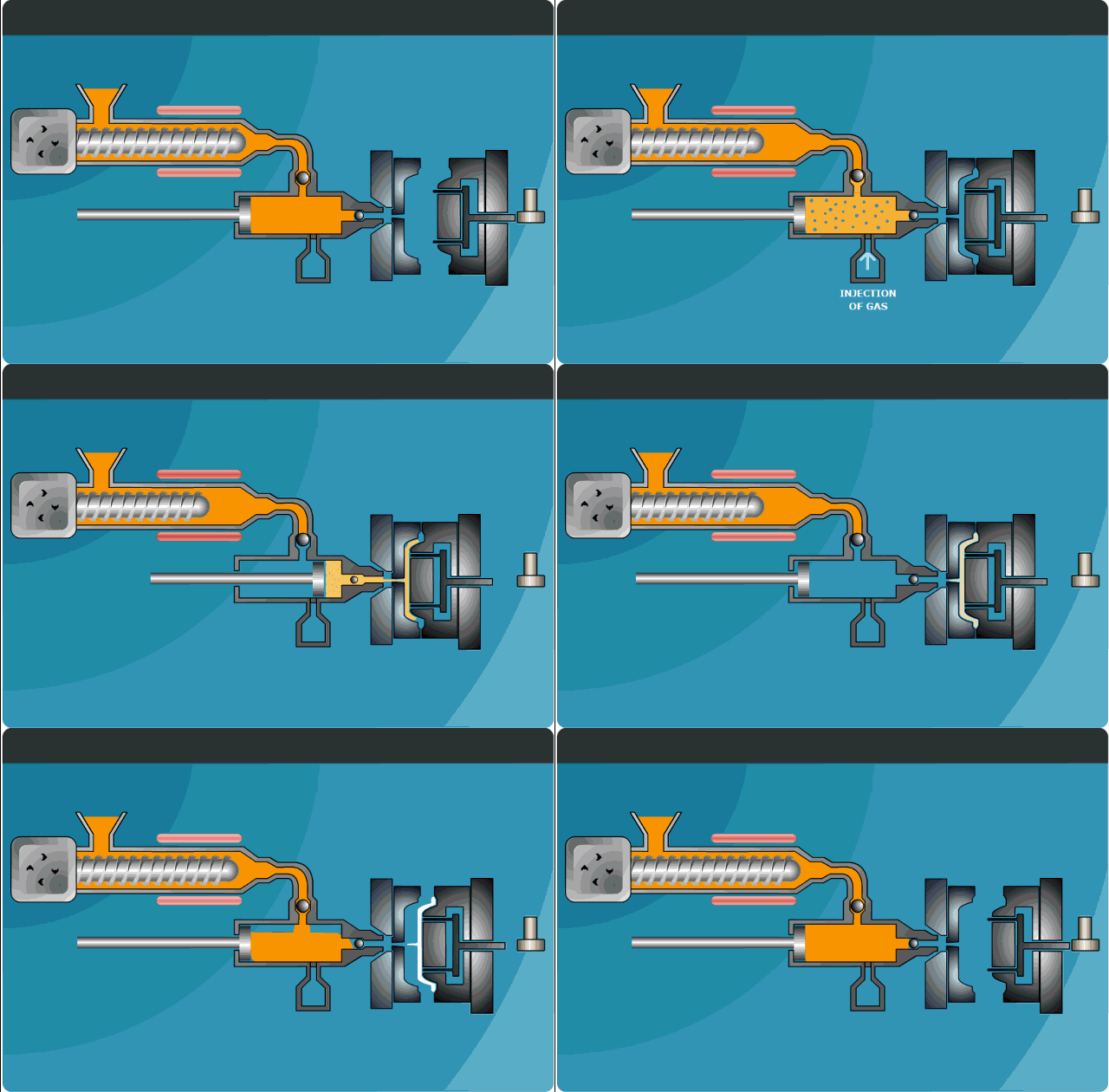
Imagine that an injection molding machine is like a giant "plastic-eating machine", and the injection volume is how much plastic it needs to "devour" each time. If you feed it too little, the parts will be "skinny and weak" (lack of material); if you feed it too much, it will "suffer from indigestion" (flash, overflow of material). Today, let's become the "dietitians" in the injection molding industry and use exaggerated yet reliable methods to create a scientific feeding plan for this "eating machine"!
The injection volume (unit: gram/g or cubic centimeter/cm³) refers to the maximum weight or volume of the plastic melt that an injection molding machine can inject into the mold cavity in one injection. It's like the "cup size selection" in a milk tea shop — choosing the wrong capacity means either not having enough to drink or wasting it! In injection molding, miscalculating the injection volume can lead to a "disastrous scene":
Insufficient Injection Volume: The plastic melt plays a "hunger game" in the mold, and the parts are missing arms and legs, causing the scrap rate to soar!
Excessive Injection Volume: The plastic "overeats" and bursts the mold. The flash is like wildly growing "plastic whiskers", and it may even "break the bones" of the mold!
\(\text{Injection Volume} = \text{Product Volume} + \text{Runner Volume} + \text{Safety Margin}\)(The safety margin is generally 10%-20% of the total weight, which is equivalent to adding a "dessert" for the eating machine just in case!)
CAD Software Method: Open the 3D model of the part with software such as UG and SolidWorks, click the "Measure Volume" button, and the software instantly turns into an "electronic scale", accurate to several decimal places! For example, the volume of a certain mobile phone case is 50cm³, and the error is smaller than a hair!
Water Displacement Method: Throw the part model into a graduated cylinder filled with water (suitable for small parts) and see how much the water level rises. The measured volume is comparable to laboratory data! But be careful not to make the model "swell up"!
The runner is like a "greedy snake" for plastic, secretly consuming a lot of raw materials! The calculation method is as follows:
Increase the amount by 15% of the total weight!
Total volume of the product and the runner = \(50 + 8.5303 = 58.5303cm³\)
Safety margin = \(58.5303×0.15 ≈ 8.78cm³\)
Final Injection Volume = \(58.5303 + 8.78 = 67.31cm³\)(Converted to weight: If the material is ABS with a density of 1.05g/cm³, then the injection volume = \(67.31×1.05 = 70.6755g\) )
The "Mathematical Black Hole" Trap: Making mistakes in unit conversion, such as mistaking mm³ for cm³, resulting in a difference of 1000 times! It's like mistaking "gram" for "kilogram", directly overfeeding the injection molding machine!
The "Runner Invisibility": Forgetting to calculate the runner volume, and the part's material shortage rate soars directly to 50%. The boss will want to "go crazy" when seeing this!
The "Vanishing Safety Margin": Not adding a safety margin, and as a result, the plastic melt "stops halfway", and the parts in the mold become "semi-finished mummies"!
A factory produces a giant plastic elephant ornament. The volume of the part is 2000cm³, and the calculation of the runner volume is as follows:
Sprue: radius 2cm, length 15cm → volume = \(3.14×2²×15 = 188.4cm³\)
Runner: 6 pieces, each with a radius of 1.5cm and a length of 20cm → total volume = \(6×3.14×1.5²×20 = 847.8cm³\)
Gate: 12 pieces, each with a radius of 0.5cm and a length of 2cm → total volume = \(12×\frac{1}{3}×3.14×0.5²×2 = 6.28cm³\)
Total runner volume = \(188.4 + 847.8 + 6.28 = 1042.48cm³\)
Safety margin (15%) = \((2000 + 1042.48)×0.15 ≈ 456.37cm³\)
Final Injection Volume = \(2000 + 1042.48 + 456.37 = 3498.85cm³\)(Approximately 3.5kg! Such an appetite makes the injection molding machine directly become a "big plastic eater"!)
Injection Molding Parameter Calculator APP: Enter the part dimensions and material type, and generate the injection volume with one click, 100 times faster than doing math problems!
Template Formula Sheet: Print out the volume formulas for common part shapes and stick them on the wall, so you can "copy answers" at any time!
The Old Craftsman's Rhyming Formula: "Add the safety margin to the product and runner, and injection molding production will be worry-free; Check the unit conversion clearly, and the boss will praise you as super reliable!"
By mastering these methods, you can turn the injection molding machine into an "excellent eater", and the production efficiency will soar directly! The next time you debug the machine, remember to use this "feeding cheat sheet" to make the plastic parts plump and round, and the boss will want to give you a bonus!


