
How Injection Molding Works
2025-04-14 10:23 Hejia Smart Technology
How Injection MoldingWorks
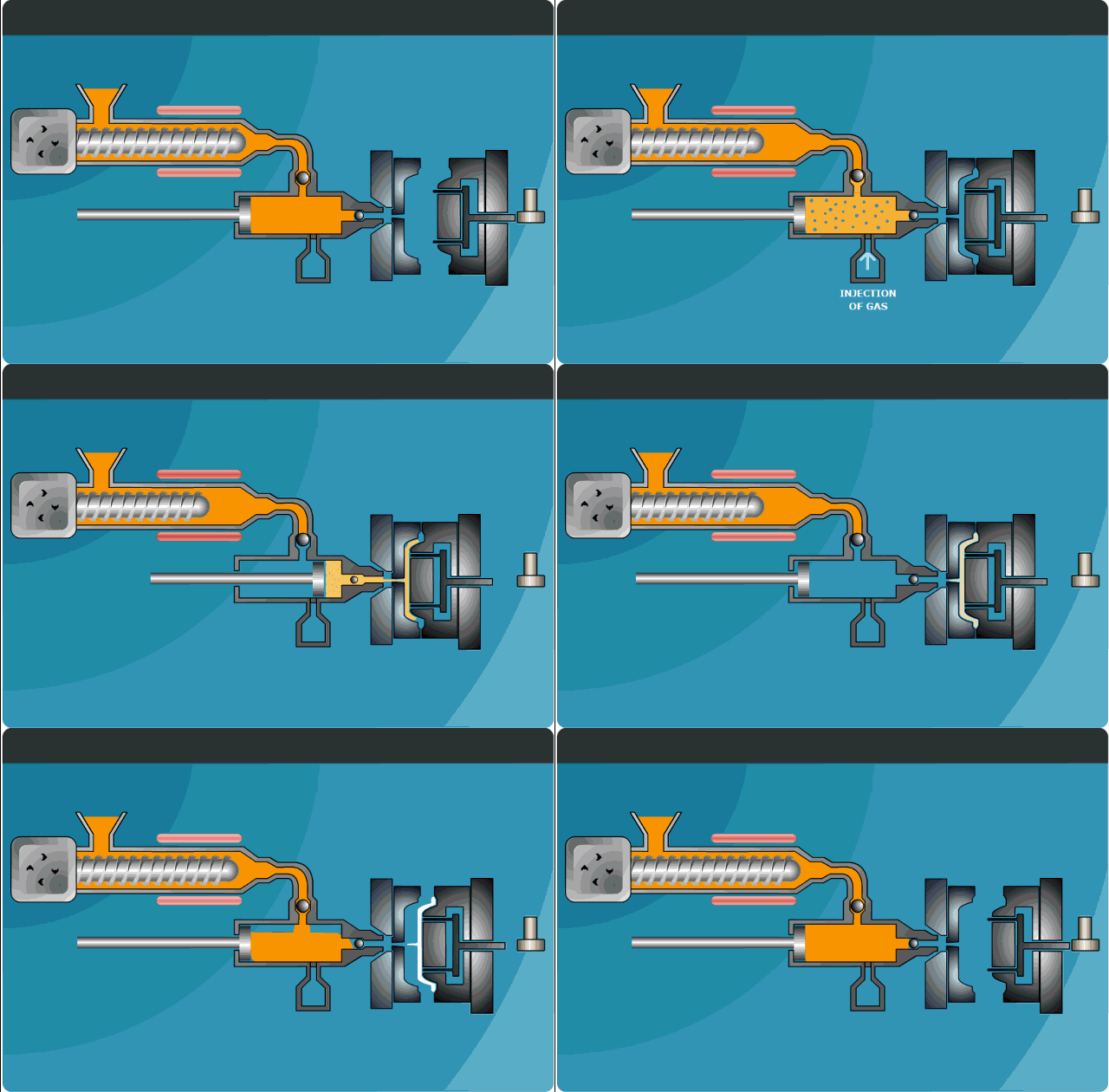
In modern manufacturing, injection molding is an extremely important production process, widely used in many fields such as automotive, electronics, medical, and daily necessities. From automotive instrument panels to mobile phone casings and children's toys, many plastic products are manufactured by the injection molding process. So, how exactly does injection molding work? Let's take an in - depth look.
The working process of injection molding mainly includes several key steps: raw material preparation, plasticization, injection, packing and cooling, and demolding.
First is the raw material preparation stage. The raw materials used in injection molding are mainly thermoplastic plastic pellets, such as common polyethylene (PE), polypropylene (PP), polyvinyl chloride (PVC), polystyrene (PS), etc. Before these plastic pellets enter the injection molding machine, it is necessary to ensure that their quality is qualified, dry, and free of impurities. For example, for some highly hygroscopic plastics like nylon (PA), they need to be thoroughly dried before use. Otherwise, moisture will cause plastic degradation at high temperatures, affecting the quality of the products.
Plasticization is one of the key steps in injection molding. This process is completed in the barrel of the injection molding machine. Heating coils are installed outside the barrel, which heat the plastic pellets in the barrel to gradually increase their temperature. Taking a common screw - type injection molding machine as an example, the screw in the barrel rotates driven by a power motor. As the screw rotates, the plastic pellets are conveyed forward along the screw groove and compacted. During this process, the plastic not only receives external heating from the heating coils outside the barrel but also generates internal frictional heat due to the shearing action of the screw. Under the action of these two heat sources, the plastic gradually plasticizes, melts, and homogenizes. Generally, the plasticization temperatures of different plastics vary. For example, for the barrel temperature setting of high - density polyethylene (HDPE), the feeding zone is usually at 30 - 50°C, and the temperatures in subsequent zones range from 160 - 300°C, while the nozzle temperature is at 220 - 300°C. [Here, a structural diagram of the barrel and screw of a screw - type injection molding machine can be inserted to show the plasticization process of plastic in it.]
When the plastic is fully plasticized, it enters the injection stage. Under the thrust of the piston of the injection cylinder, the screw injects the molten and plasticized plastic at the head of the screw into the mold cavity through the nozzle at high speed and high pressure. The selection of injection pressure and speed is crucial, which depends on factors such as the shape, size, wall thickness of the plastic product, and the characteristics of the plastic. For example, for some thin - walled plastic products, a higher injection speed is required to ensure that the plastic can quickly fill the mold cavity; while for large - sized and thick - walled products, a greater injection pressure is needed to ensure that the plastic can fill every corner of the mold. Usually, the injection pressure is generally between 20 - 150MPa, and in some special cases, it can even reach 180MPa. [Here, a working principle diagram of the injection device of the injection molding machine can be inserted, marking the key components such as the injection cylinder, screw, and nozzle.]
After the plastic is injected into the mold cavity, the packing and cooling stage follows immediately. The purpose of packing is to continuously supply plastic during the cooling and shrinkage process of the plastic product to prevent defects such as depressions and sink marks caused by shrinkage. The packing pressure is generally 30% -60% of the injection pressure. At the same time, the cooling system in the mold starts to work. The coolant (usually water) circulates to take away the heat of the plastic, gradually cooling and solidifying the plastic. The mold temperature also affects the quality of the product. Different plastics require different mold temperatures. For example, the mold temperature of HDPE is generally 20 -60°C. As the cooling time progresses, the plastic gradually solidifies into a product with the same shape as the mold cavity. [Here, a schematic diagram of the mold cooling system can be inserted to show the circulation path of the coolant in the mold.
Finally, it is the demolding stage. When the plastic product cools to a certain extent and has sufficient strength, the mold clamping mechanism opens the mold. The ejection device installed on the moving template starts to work, and through components such as ejector pins, the plastic product is ejected from the mold cavity, completing the entire injection molding process. The design of the ejection device needs to be optimized according to the shape and structure of the product to ensure smooth demolding without damaging the product. [Here, a schematic diagram of the mold opening and the ejection device ejecting the product can be inserted.]
Through this series of precise and orderly steps, injection molding transforms plastic pellets into various plastic products with complex shapes and accurate dimensions, providing an efficient and reliable manufacturing method for modern industrial production and promoting the continuous development and innovation of various industries.
Name:
Message:
Verification code: 
Submit
Comment
About Us
Contact Us
Address:Building 2, No. 42 Dongkeng Avenue South, Dongguan City, Guangdong Province, China
WhatsApp:+86 15814109189
Emial:contact@hejiatek.com


Whatsapp
+86 15814109189 (Click here➡)
Your Need
Leave us a message